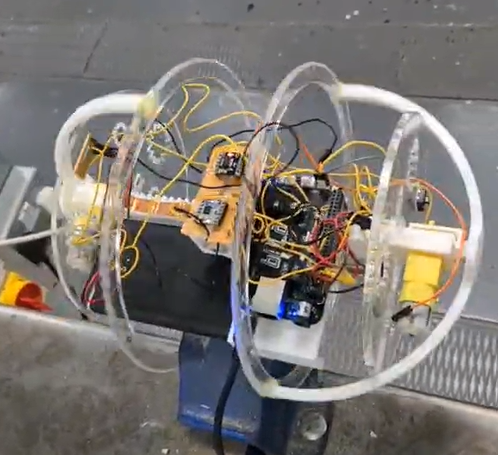
01Background
The original idea was to build a companion droid that would follow you and eventually learn tricks and responses from you like a parrot. Due to logistics delays we had to scale back and just focus on the following feature. An app on your phone would make a high-frequency noise which only young children would hear (we could not use ultrasound due to budget constraints). The microphones would act like ears and a PID algorithm would steer the robot towards the sound.
02Details
The chassis consists of component housings embedded into an axle beam. The wheels would then stretch around into semicircular casing, forming a shell. When beckoned by the app, the robot will open its shell and begin to move towards the sound. The robot had to be rapidly iterated due to time and budget constraints, resulting in a 3D printed PLA chassis and laser cut acrylic supports. We tried to make everything snap-fit and mechanically fastened so that the parts were removable and repairable. This also helped to speed up development.
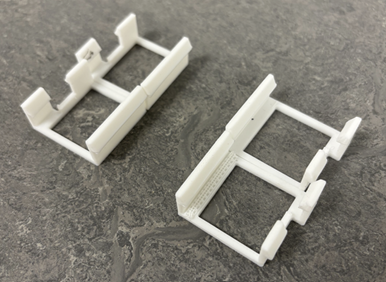
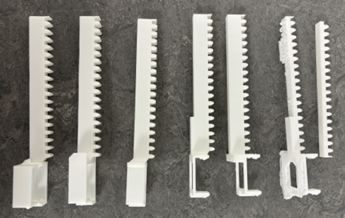
Due to cheap equipment (noisy microphones, faulty breadboards, etc..) and limited access to soldering equipment, we took over a week to fine-tune audio processing into usable data. We tried several approaches for audio-location: there was too much noise to accurately use the relative sound delay to approximate bearings, and the doppler effect was also not distinguishable from the data. The most significant difference between microphone input was volume. I essentially boosted the effect by placing the microphones on either side of the robot like ears, to keep them soundproofed from each other and increase directional bias. The bias would then become negative feedback for the relative wheel speeds and the robot would decay into the correct direction.
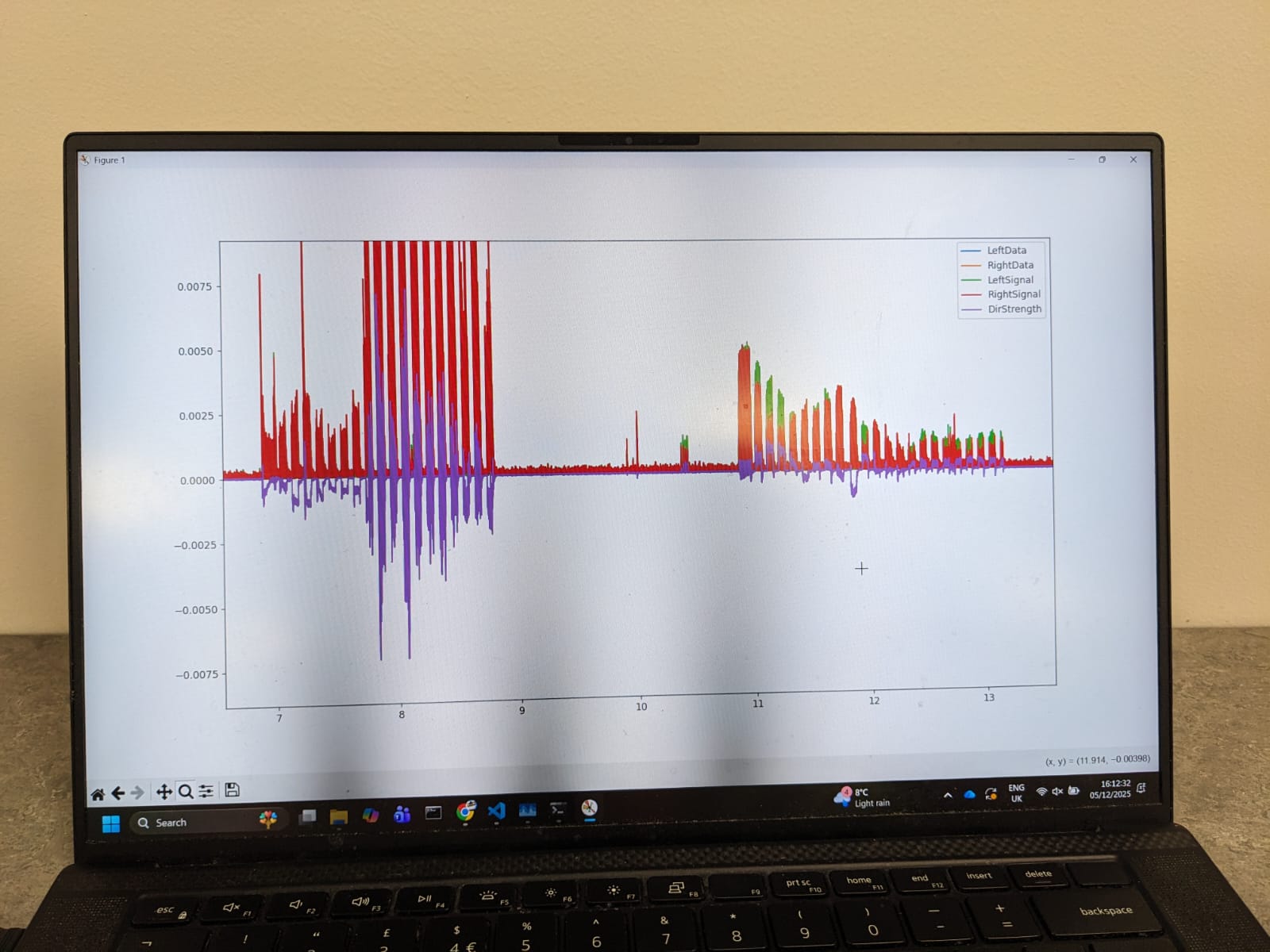
We used a Bela board for the embedded system because of its high-throughput audio capabilities, and typical hobbyist motors with copper tape to sense when the shell had been open and closed.
03Outcome
Though the power usage fit the specifications when the electronics were tested separately, there was not enough power to overcome friction when integrated into the chassis. This taught us an important lesson in integrated testing and is the reason why there is not footage of the robot actually rolling around on the ground.